Long Distance Listening Devices: Hardware and iPhone Apps Compared (2026 Buyer's Guide)
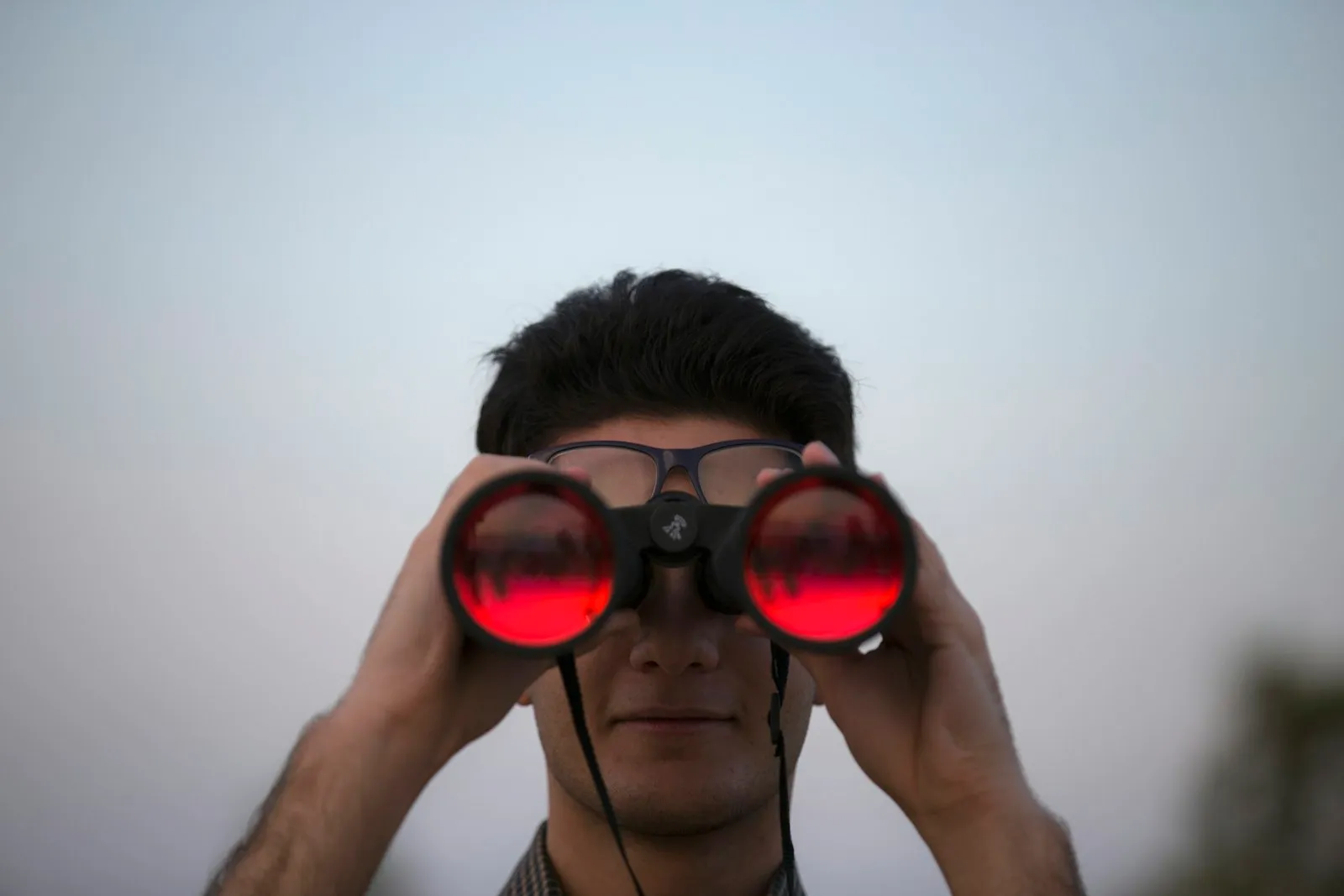
"Long-distance listening device" covers a strange range of tools, from $30 plastic gadgets on Amazon to $2,000 broadcast-grade parabolic microphones used by NFL sideline crews. Sorting out what actually works starts with a blunt question: how far do you need to hear, and what do you need to hear? The right answer changes by an order of magnitude depending on whether you want to follow a lecture across a hall or record a distant bird call.
This guide walks through the four categories of long-distance listening tools currently sold in 2026, explains what each is genuinely capable of, and offers concrete picks by use case. It leans on our own testing in the "iPhone with amplifier app" category and on published field data from the birding and pro audio communities for parabolic and shotgun mics.
What "long distance" actually means
Sound follows the inverse-square law, which means sound pressure halves (drops by 6 decibels) every time you double the distance from the source. A voice measured at 60 dB SPL one metre away is 54 dB at 2 metres, 48 dB at 4, 42 dB at 8, and 36 dB at 16. By 32 metres you are down to 30 dB, which is roughly the ambient noise floor of a quiet indoor room. Beyond that, no amount of gain will help, because the target signal is quieter than the noise your microphone is already picking up.
What this means in practice: the useful range of any listening device is set primarily by the microphone's ability to reject noise from directions other than the target. Amplification is the smaller lever. A parabolic microphone that adds 20 dB of directional selectivity extends usable range far more than an amplifier app that adds 20 dB of gain, because the amp is boosting the noise floor right along with the target. If you want to check your local noise floor, our browser decibel meter gives you a live dB reading in seconds.
Realistic usable ranges for speech intelligibility in calm outdoor conditions:
| Tool | Rough usable range | Price range |
|---|---|---|
| iPhone, unaided ear | 2 to 4 metres | N/A |
| iPhone + Apple Live Listen | 5 to 15 metres | Free with AirPods |
| iPhone + amplifier app (16× gain, EQ) | 15 to 25 metres | Free to $40/year |
| iPhone + entry shotgun mic + app | 25 to 40 metres | $60 to $150 |
| iPhone + broadcast shotgun + app | 40 to 60 metres | $300 to $500 |
| iPhone + parabolic dish + app | 50 to 100 metres | $400 to $800 |
| Standalone pro parabolic (Klover Mik, Wildtronics) | 80 to 200 metres | $500 to $1,500+ |
| Consumer "bionic ear" toy | 3 to 10 metres | $20 to $50 |
| PSAP / OTC hearing aid | 3 to 8 metres | $300 to $2,000 |
These are honest field ranges for intelligible speech in calm conditions with the mic on-axis to the target. Wind, urban noise, and any barrier between you and the target will shrink every number.
The four categories, honestly
1. Parabolic microphones
A parabolic mic is a dish (typically 18 to 26 inches across) with a microphone at the focal point. The dish gathers sound from a narrow forward cone (roughly 10 to 20 degrees wide) and rejects everything else. It is the only piece of consumer or prosumer gear that meaningfully extends distance for far-field targets, because it adds directional selectivity rather than raw gain.
What they cost, and what they get you:
- Wildtronics Pro Mono Parabolic ($389). The birding community's default. Hand-holdable, no preamp needed, works with any recorder including a Lightning-adapted iPhone. Effective on-axis boost is around 15 to 18 dB.
- Wildtronics Amplified Universal ($519). Same dish with a built-in preamp; better for very quiet distant targets like bat calls or dawn chorus at long range.
- Klover MiK 09 ($800). Compact 9-inch pro parabolic. Popular with sports broadcasters. Smaller dish means less low-frequency reach but easier to aim.
- Klover MiK 26 ($1,500+). Broadcast standard. The one you see on NFL sidelines. Roughly 20 dB on-axis boost. Genuinely reaches 150 metres for speech.
- Telinga Universal ($600+). Swedish birding classic, foldable dish, uses your own microphone.
- Sound Shark ($699). Sold as a video-production tool with a hollow handle for cables. Prosumer, roughly 12 to 15 dB on-axis.
Who they are for: birders, wildlife photographers, sports broadcasters, private investigators, wildlife biologists, filmmakers doing outdoor dialogue capture. Not practical for indoor use because they are physically large.
2. Shotgun microphones
A shotgun mic is a directional condenser microphone housed in a long tube (typically 6 to 20 inches). The tube acts as an acoustic filter that suppresses sound arriving from the sides. It provides less directional selectivity than a parabolic (typically 6 to 10 dB rather than 15 to 20) but is dramatically smaller, cheaper, and easier to point.
Practical picks by price:
- Rode VideoMicro II ($79). Entry-level, 3.5 mm output, uses your recorder's plug-in power. Modest directional selectivity but a real step up from a bare iPhone mic.
- Sennheiser MKE 200 ($100). Cardioid, camera-mount form factor, powered by internal batteries.
- Rode VideoMic Pro+ ($299). Higher-quality capsule, digital output options, works well as a docked iPhone accessory.
- Deity S-Mic 2 ($330). Indie film favourite, needs 48 V phantom power and an interface.
- Sennheiser MKE 600 ($430). Broadcast standard, phantom-powered, reaches its full potential with a proper preamp.
- Rode NTG5 ($499). Very short shotgun with excellent off-axis rejection. The one field-recording pros grab first.
Who they are for: anyone doing hobbyist video recording, journalists, podcasters recording in the field, and anyone who needs meaningful range improvement without carrying a dish.
3. Personal Sound Amplifiers and OTC hearing aids
PSAPs and Over-The-Counter (OTC) self-fitting hearing aids are worn in the ear and designed for hearing assistance rather than long-distance listening per se. They are worth mentioning because search for "long distance listening" often overlaps with search for hearing help; the two are different problems.
- Sony CRE-C10 self-fitting OTC hearing aids ($999). Real hearing aid, discreet, sold direct to consumer, tuned via an iPhone app.
- Sony CRE-E10 ($1,200). Rechargeable variant of the C10.
- Eargo 7 ($2,650). Deep-canal OTC hearing aids with recharging case.
- Jabra Enhance Select 300 ($1,995). Behind-the-ear OTC with optional audiologist support.
These devices amplify what your ear naturally picks up. They do not extend distance in any meaningful way because the microphone is on your ear, not aimed at the target. If your reason for looking at long-distance listening tools is actually hearing loss, an OTC hearing aid or a Live Listen setup will serve you better than a parabolic mic.
4. iPhone amplifier apps (and Live Listen)
For most people asking about long-distance listening in 2026, the honest answer is that an iPhone with the right app already covers the use case. The iPhone's primary microphone is genuinely sensitive; the constraint is software, not hardware. Free options like Live Listen give you 3× to 4× gain; paid amplifier apps go up to 16× with EQ, noise suppression, and background recording.
Where each fits:
- Apple Live Listen (free). Built into iOS since 2018. Streams iPhone mic to AirPods, Beats, or MFi hearing aids. 15-metre practical range in a quiet room. No EQ, no recording. Full analysis at Live Listen on iPhone.
- Spy Hearing (freemium, $2.99/week or $39.99/year for pro). Up to 16× gain, 8-band parametric EQ, background recording, works with wired or Bluetooth headphones. Designed specifically for the "hear further than Live Listen can" case.
- Petralex ($14.99/month or lifetime purchase). Audiogram-based EQ tuning. More of a hearing aid replacement than a distance-listening tool.
- Sound Amplifier: Hearing Aid App ($9.99/month). 8-band EQ, high gain, ad-supported free tier. Solid alternative to Spy Hearing.
- Hear Boost (freemium). Designed for hearing loss, adequate for general distance-listening use.
- Ear Spy (free). High gain, no recording, ad-heavy. Fine for casual experimentation.
Detailed head-to-head comparison at Best iPhone sound amplifier apps.
Best pick by use case
Hearing across a large room, a lecture hall, or a restaurant
iPhone amplifier app with wired earbuds. Real usable range up to about 25 metres in a quiet indoor space. No extra hardware needed. Free options (Live Listen) work for most cases; a paid app buys you EQ that suppresses low-frequency room hum and lifts speech intelligibility.
Birding and wildlife audio
Parabolic microphone. Nothing else comes close for capturing distant bird vocalizations, and the birding community has settled decisively on the Wildtronics Pro Mono at around $389 as the best value pick. Pair it with a portable recorder like the Zoom H5 or an iPhone with a Lightning-to-XLR interface. Cornell's Merlin Sound ID app on the iPhone will identify species from what you capture.
Sports and coaching audio at the field
Compact parabolic (Klover MiK 09 or Sound Shark) or a broadcast-quality shotgun. Field distances (10 to 80 metres from sideline to play) fall in the parabolic sweet spot.
Security perimeter monitoring
A shotgun mic on a fixed mount, feeding a computer or recorder running detection software. Consumer parabolics are impractical for continuous use. For most home security use cases, camera-integrated microphones are more appropriate.
Working around mild hearing loss
Live Listen or a dedicated OTC hearing aid depending on severity. Amplifier apps sit between them: better than Live Listen for gain and EQ, cheaper than hearing aids, and usable with AirPods you probably already own.
Discreet listening across a public space
iPhone with amplifier app, wired in-ear headphones, phone placed inconspicuously with its bottom microphone pointed at the target. Real range roughly 15 to 25 metres. The physical spy gadgets marketed for this purpose are almost universally worse than an iPhone with a decent app, because they use budget microphones and lack any DSP.
Why the cheap "bionic ear" devices don't work
Amazon and eBay both sell dozens of $20 to $50 devices marketed as spy listening tools, bionic ears, or long-range hearing aids. They almost all have the same design: a small directional microphone in a plastic housing, driving a pair of earphones via a simple analog amplifier. In practice:
- The microphone is a low-grade electret capsule with roughly 60 to 80 dB dynamic range. iPhone microphones have closer to 100 dB dynamic range.
- There is no EQ, no noise suppression, no DSP of any kind. Amplification adds noise proportionally.
- The "directional" claim is usually marketing. Most units are barely more directional than an omnidirectional mic.
- Battery life is short and the amplifier introduces hiss.
The comparison test is easy to run yourself. Set up a quiet target at 10 metres, listen through a $30 bionic ear, then listen through an iPhone with an amplifier app and any decent earphones. The iPhone wins on every axis, and it does not require carrying a separate device.
External microphones that stack with iPhone apps
If you own an iPhone amplifier app and want to extend its range, adding a decent external microphone gives you dramatically more headroom than upgrading the app can. iPhone-compatible options in 2026:
- Shure MV88+ ($249). USB-C, high-quality condenser, cardioid or omni pattern, well supported by iPhone audio apps.
- Rode VideoMic Me-C ($79). USB-C direct, compact, cardioid pattern.
- Sennheiser MKE 200 ($100). With a TRS-to-TRRS adapter, works with iPhone via the Lightning-to-3.5 mm dongle.
- Rode SmartLav+ ($79). Wired lavalier, clip to a discrete spot near the target if you have physical access.
- DJI Mic 2 or Rode Wireless Go II ($350+). Wireless mic system, transmitter on the target, receiver on the iPhone. Extends practical distance to 100+ metres if you can physically place the transmitter.
A $100 shotgun mic plus an iPhone amplifier app costs less than a mid-range parabolic and covers 90 percent of the situations where casual users think they need a parabolic.
Legal considerations before you buy
Owning any of the devices above is generally legal in the United States. Using them changes the analysis:
- Public spaces (parks, streets, ticketed events) allow amplified listening with few restrictions.
- Recording amplified audio falls under state consent laws. Twelve states require all-party consent; the other 38 require one-party consent (which you count as if you are present). Full state-by-state breakdown at Recording laws by state.
- Listening across property lines into a private conversation, even without recording, becomes legally murky quickly and can violate state eavesdropping statutes.
- Federal law prohibits intercepting a conversation you are not a party to, regardless of your state's rules.
This is educational, not legal advice.
Related reading
- How to hear from far away with your iPhone: technique for getting the most out of what you already own.
- Best iPhone sound amplifier apps: head-to-head tests of the top amplifier apps.
- Live Listen on iPhone: the free built-in option, with honest range numbers.
- Live Listen range test: our full test methodology and data.
- Recording laws by state: before you record anything captured with a long-distance mic.
Frequently asked questions
- What is the best long-distance listening device in 2026?
- For general use cases at ranges up to about 25 metres, an iPhone paired with a dedicated amplifier app is the best value option and requires no extra hardware. For genuinely long distance (30 to 150 metres), a parabolic microphone like the Wildtronics Pro Mono at $389 is the birding community's benchmark, and the Klover MiK 26 at around $1,500 is the broadcast standard. Consumer 'bionic ear' devices under $50 almost always perform worse than an iPhone with the right app.
- How far can a long-distance listening device really hear?
- Realistic usable ranges for intelligible speech under calm outdoor conditions: iPhone amplifier app alone, 15 to 25 metres; iPhone plus entry shotgun mic, 25 to 40 metres; iPhone plus parabolic dish, 50 to 100 metres; standalone pro parabolic like the Klover MiK 26, 80 to 200 metres. Wind, urban noise, and any barrier between you and the target substantially reduce every number. Beyond about 30 metres outdoors, no amplifier app alone can help because the target signal drops below the iPhone microphone's noise floor.
- Do I need special hardware or is an iPhone enough?
- For hearing across a large room, at a lecture, or in a noisy restaurant, an iPhone with a decent amplifier app is usually enough. For hearing outdoors at 30 metres or more, or for capturing distant wildlife audio, you need to add an external microphone. A $100 shotgun mic covers most casual long-distance needs; a $400 parabolic covers birding and sports. The iPhone remains the recorder and amplifier in both setups.
- Are parabolic microphones better than shotgun microphones?
- For far-field on-axis capture, yes. A parabolic dish adds roughly 15 to 20 dB of directional selectivity, versus 6 to 10 dB for a typical shotgun. That difference roughly doubles usable distance. Parabolics are also physically much larger and only work with the target directly in front. Shotguns are more practical for handheld use and for capturing subjects that move.
- Do those cheap 'spy listening' devices on Amazon actually work?
- Not well. The $20 to $50 devices marketed as bionic ears or spy listening tools use low-grade electret microphones and simple analog amplifiers with no DSP or noise suppression. Head-to-head against an iPhone running any competent amplifier app, they lose on gain headroom, dynamic range, and intelligibility. If budget is the constraint, the iPhone you already own plus a free app outperforms every device under $100 in this category.
- Can I record what I hear through a long-distance listening device?
- Depends on the device and where you are. iPhone amplifier apps like Spy Hearing record everything they capture to the phone's local storage. Standalone parabolic and shotgun mics require a separate recorder (Zoom H5, Sound Devices MixPre, or an iPhone acting as recorder). Recording is legal under federal one-party consent if you are a party to the conversation; twelve U.S. states require all-party consent. Full breakdown at Recording laws by state.
- Is it legal to use long-distance listening devices?
- Ownership is generally legal in the U.S. Use varies. Amplified listening in public spaces (parks, streets, venues you have entered) is generally legal. Listening across property lines into private conversations can violate state eavesdropping laws even without recording. Recording amplified audio is governed by state consent statutes (12 all-party states, 38 one-party). Federal wiretap law separately prohibits intercepting conversations you are not a party to.